
Roofing in Midland, GA: Newer Homes, First Replacement and Storm Repair
Call Us
(706) 418-8677
Storm Damage
Wind, hail and water
Roof Replacement
First cover to full tear-off
Why a Midland roof tends to fail at twenty years
Midland’s roofs are younger than Columbus’s, and that is exactly the problem. The Census Bureau’s 2024 figures for ZIP 31820, which carries Midland addresses, put the median year built at 2004, with 3,312 of its 5,176 housing units — about 64% — built in 2000 or later. A house finished in 2004 is now past the service life of the shingle a builder put on it, and a first replacement is a different job from the repair that carried the roof through its first two decades. On a street off Midland Road or US 27, the question is usually which of those two you are facing.
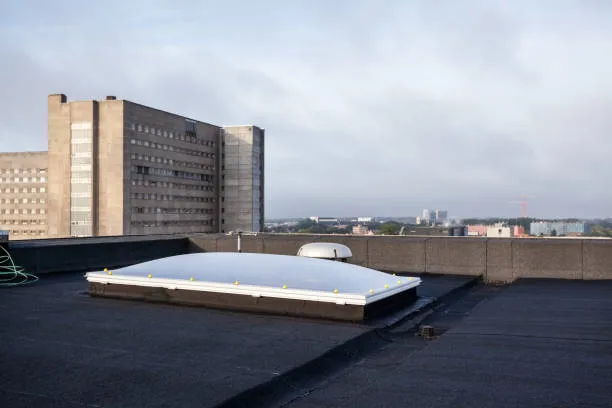
Homes in Midland: the local picture
Midland runs along the Muscogee–Harris county line in northeast Columbus, and that line is the most useful single fact about a roof here: it decides which office signs off on the work. The four blocks below cover the ground, the housing stock, the weather record and the permit question.
Setting and elevation
Midland sits at about 546 feet above sea level, roughly 230 feet above the Chattahoochee at downtown Columbus, on the ground that rises from the river toward Harris County. For a roof, that difference is about exposure rather than altitude. The community’s newer subdivisions off US 27, US 80 and Georgia 85 sit on open ground where wind reaches a gable end before it reaches a sheltered street, and the same openness means summer sun lands on a full roof plane rather than filtered through a canopy. Water still decides the details. Lots graded away from the road drain toward the rear of the house, which is where fascia, soffit and wall junctions take the first damage, and the roof plane facing the afternoon sun ages on a different schedule from the one facing the street. On an open lot, both are fully exposed.
Housing age and roof stock
ZIP 31820’s median year built is 2004, and the decade distribution explains the work: 1,996 units went up in the 2000s, 947 in the 2010s and 369 from 2020 onward, while only 383 units — 7.4% — predate 1980. That is the opposite of Columbus, where half the stock predates 1980. Builder-grade architectural shingles from the 2000s are now at or past their service life, and the boots, vents and flashing installed with them are the same age. The first replacement on a Midland house usually arrives with the original builder’s details still in place, which is good news: there is one layer, not three, the decking has not been hidden by a previous cover, and the tear-off exposes what is actually there rather than another installer’s shortcut.
Weather these roofs take
Midland straddles two counties, so it has two weather records. On the Muscogee side, NOAA’s 1991–2020 normals for the Columbus Metro Airport station give a July normal high of 92.9°F, 4.92 inches of rain in March and 2.78 in October, the driest month — about 49 inches a year by our arithmetic on the monthly normals. On the Harris side, FEMA’s declaration record includes Hurricane Helene in 2024, Irma in 2017, the 2016 severe storms and flooding, and the 2011 tornado and straight-line wind outbreak, plus Ivan in 2004 and Opal in 1995. Neither record measures damage to any particular roof. Together they describe a place where heat ages sealant every summer and wind arrives often enough to test what is left of it.
Who serves this address
The county line decides the permit office. On the Muscogee County side of Midland, that is the Columbus Consolidated Government’s Inspections and Code department, which enforces the Georgia State Minimum Construction Codes. On the Harris County side it is Harris County Community Development, at 125 Barnes Mill Road in Hamilton, which issues building construction permits for the county. Neither office publishes a plain statement that a like-for-like reroof needs a permit, and we will not invent one: the answer depends on the address and the scope, so ask the office that covers your side of the line before work begins. Both publish their forms and fee schedules online, and both answer the phone during business hours. A contractor who cannot say which county you are in has not looked.

Roofing services in Midland
Midland’s housing stock shapes the service list. A 2004 subdivision roof usually needs its first full replacement rather than a patch, while the smaller number of older houses near the community’s western edge tend to arrive with repairs that have been deferred.
When water is already coming in, the job starts with finding the entry point and stopping the leak, and the paperwork follows the repair. Wind and hail work is its own discipline: damage documented so an adjuster can act on it needs photographs, measurements and a written scope, not a verbal estimate. Where the shingle is at the end of its life, a replacement that strips to the deck is the version worth paying for, and a maintenance visit between replacements is what keeps the original details from failing early.
Material follows the house. Most Midland roofs are pitched asphalt, so shingle work is the core of what we do here, with tile and its underlayment handled on the houses that have it. Flat porch roofs, additions and small commercial units are a separate system: EPDM for low-slope sections and coatings where the deck still has life are judged on their own terms rather than folded into a shingle quote. Tarping buys the days between a failure and permanent work, commercial property runs on scheduled maintenance, and the residential work on occupied houses that makes up most of this community has to stay weathertight every night.
Next step for a Midland roof
What a roof visit covers in Midland
A first-replacement house is easier to read than an old one, and we use that. The visit starts with the attic: the underside of the deck tells you whether the 2004 sheathing is still sound, whether the ventilation was sized for the roof, and whether any past repair was made from above without addressing what caused it. Then we walk the roof itself and check the details a builder installs quickly — pipe boots, furnace and water-heater vents, the valley where two planes meet, and the step flashing at a wall or chimney. Because most Midland roofs are on their first cover, the decision is usually simpler than on an older Columbus house: replace the field and the details together, or repair a single failed detail and get more years from the rest.
Our Roofing Process
- Read the attic first, then the roof surface, then the details
- Measure the roof planes rather than estimating them from the ground
- Identify which details are original to the house and which have been replaced
- Tell you plainly whether one more repair is worth it
- Put the sequence and the materials in writing before work starts
What we check before we quote
- Whether the decking is sound enough to hold new fasteners
- Whether the roof has one layer or several, and what that does to the tear-off
- Whether the original vents and boots are still the weak points
- Whether the attic ventilation is working with the roof or against it
- Whether a repair will still be sound after the next storm season

Why homeowners in Midland choose us
Emergency Roofing Columbus works both sides of the Midland county line, which matters more here than it sounds. We know that the Muscogee side answers to Columbus Inspections and Code and the Harris side to Community Development in Hamilton, and we do not confuse the two when a job is scheduled. We expect a first-cover roof on a 2000s house, so we look at the decking and the original details before recommending a replacement rather than after. The scope you approve names the materials and the order of work, photographs go to you before the invoice does, and if a repair will hold for another few seasons, that is what we will tell you.
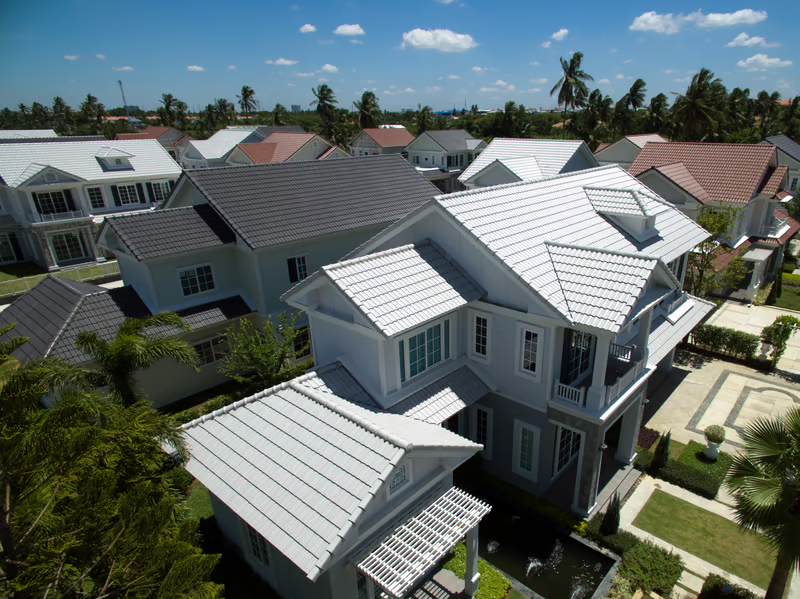
Why now is the right time for a Midland roof
The arithmetic here is a decade, not a storm. Roughly two-thirds of ZIP 31820’s housing was built in 2000 or later, and the shingles installed on those houses in the 2000s have spent twenty summers at a normal July high of 92.9°F. A roof does not fail all at once at the end of its rating: the sealant at the boots goes first, then the pipe collars, then the valley, and each of those is a small repair while the field is still sound.
The other half of the timing is queue. When a tropical system comes through — Helene in 2024, Irma in 2017, Opal in 1995 — every damaged roof in the county competes for the same materials and the same crews, and the wait is longest for the households that can least afford an open roof. Work done in a dry month, on a roof that is inspectable, is work done on your schedule instead of the weather’s.
There is a documentation angle too. A first replacement on a 2000s house is the point where the roof’s history starts, and photographs, a written scope and a record of what was replaced under the shingle are worth having when the next owner, insurer or inspector asks.
Midland, GA and the roads we cover
Frequently asked questions
Which county is Midland in, and which office issues the roofing permit?
Midland straddles the line: the community is in northeastern Columbus in Muscogee County and extends into southeastern Harris County. A Muscogee County address goes to the Columbus Consolidated Government’s Inspections and Code department; a Harris County address goes to Harris County Community Development at 125 Barnes Mill Road in Hamilton. Ask the office that covers your side before work starts.
How old are Midland's roofs?
The 2024 American Community Survey figures for ZIP 31820 put the median year built at 2004, across 5,176 housing units. Of those, 3,312 — about 64% — were built in 2000 or later, and only 383 predate 1980. That makes Midland a first-replacement community rather than a repair-on-repair one.
What does 546 feet of elevation change about a roof in Midland?
Less than the ground under it does. At about 546 feet, Midland sits roughly 230 feet above downtown Columbus on the rise toward Harris County. The practical effect is exposure: newer subdivisions on open ground take wind on a gable end and full summer sun on a roof plane, and lots that drain to the rear put water against fascia and wall junctions first.
Should a 20-year-old roof be replaced?
Not by age alone, but on a Midland house the age is a fair prompt to look. A roof installed in the 2000s is at the end of its service life, and the question is whether the decking and the original details are still sound. If they are, a repair is reasonable; if the boots and valleys have already been patched twice, the field is next.
What are five signs a Midland roof needs attention?
Granules collecting in the gutters, sealant cracking around the boots, a stain that reappears after rain, shingle tabs that lift at the ridge, and daylight visible from the attic along a rafter line. On a 2000s house the first three usually show up together, because the details were installed at the same time and age at the same rate.
What happens on a roof inspection in Midland?
We start in the attic and read the decking and ventilation from underneath, then walk the roof and check boots, vents, valleys and step flashing as separate items. You get a written scope naming what is failing, what can be repaired, and what the repair depends on, before anything is scheduled.