
Roofing in Cataula, GA: Two Kinds of Roof on the Same Road
Call Us
(706) 418-8677
Storm Damage
Wind, hail and water
Two Roof Eras
2000s shingle, 1950s decking
Two roof eras on one road in Cataula
Cataula has two roof stocks living side by side, and a roofer who quotes them the same way will get one of them wrong. The Census Bureau’s 2024 figures for the Cataula CDP put the median year built at 2003 across 544 housing units, with 248 of them — 45.6% — built in the 2000s. Another 175 units, 32.2%, predate 1980. On the same stretch of US 27 you can pass a 2006 subdivision roof on its original shingle and a 1950s farmhouse whose decking has never been opened, and the two need different work.

Homes in Cataula: the local picture
Cataula is an unincorporated community and census-designated place in Harris County, sitting on US 27 about sixteen miles southwest of Columbus. It grew in two distinct waves rather than steadily, and that shape is what a roofer reads first. The four blocks below cover the ground, the housing stock, the storm record and the permit question.
Setting and elevation
Cataula sits at about 696 feet above sea level by the USGS elevation query, on the Piedmont rather than the coastal plain, and the community is built along Cataula Creek, which runs east through the county. That matters to a roof in two ways. Creek corridors hold moisture longer than open ridge ground, so north-facing planes and shaded valleys on a house near the water stay damp after rain and grow the dark biological staining that owners mistake for shingle failure. And US 27 runs straight through the community, so the houses closest to the highway take road grime and standing-water spray on the elevation that faces it, while the ones set back behind trees trade that for shade and debris.
Housing age and roof stock
The distribution is the whole story here. Of Cataula’s 544 housing units, 248 went up in the 2000s, 60 in the 2010s and 26 from 2020 onward, while 175 predate 1980 — 51 in the 1970s, 56 in the 1950s and 48 in the 1940s. A 2006 house is on its original shingle and facing a first replacement decision; a 1950s house may still have plank sheathing under a roof that has been patched for decades, with flashing that was rebuilt by hand or not at all. The 1980s and 1990s are almost absent from the count, which tells you the community grew in two waves rather than steadily. The 2010s and 2020s units are the newest roofs in the community, and they are the ones least likely to need anything beyond a repair to a single detail.
Weather these roofs take
This page does not borrow Columbus’s climate normals, because Cataula is in Harris County and has its own record. What is sourced for this address is FEMA’s federal declaration list for Harris County: Hurricane Opal in 1995, Hurricane Ivan in 2004, the April 2011 tornado and straight-line wind declaration, the 2016 severe storms and flooding, Hurricane Irma in 2017, Hurricane Helene in 2024, and tropical storm and winter storm emergencies in 2026. A declaration defines an area eligible for assistance; it does not measure damage to your roof. The pattern is the useful part: a house here has been through all of it, and whatever was done to its flashing after each event is what the next one tests. The county record also explains why quotes in Cataula so often include flashing work: it is the part of a roof that has been tested most often here.
Who serves this address
Cataula is Harris County, so the permit office is Harris County Community Development at 125 Barnes Mill Road in Hamilton — the county seat, a short drive up US 27 — which enforces the state building codes, performs plan review and issues building construction permits. Whether a like-for-like reroof needs a permit is not stated plainly on the department’s published material, and we will not invent a rule: ask them with your address and scope in hand before work begins. Because the office is in Hamilton, a Cataula owner can walk in with a plot plan and a written scope and get an answer without guessing from a website. Ask specifically whether the scope you have been quoted triggers a permit, and keep the answer with the rest of the job paperwork.

Roofing services in Cataula
Cataula’s mix means the first question on a visit is which kind of house we are standing on, not which product is on the menu.
Where water is already inside, the work starts with finding the entry point rather than the stain, and on a storm-damaged roof the damage is documented before anything is repaired so the evidence survives the repair. Where a 2000s cover has reached the end of its life, a replacement that strips to the decking is the honest answer, and on the older houses maintenance work that keeps original details alive is usually worth more than a new field over failing flashing.
Material follows the house rather than the fashion. Most pitched roofs here are asphalt, so shingle work covers the majority, and tile and its underlayment get their own approach where they exist. Porch roofs, additions and outbuildings are a separate system, which is why EPDM for the low-slope sections and coatings where the deck is still sound are assessed separately. Tarping holds a damaged roof through the gap before permanent work, commercial and farm buildings run on their own schedule, and the residential work on occupied houses that makes up most of Cataula has to stay weathertight every night.
The quote has to follow the same logic. On a 2006 house the scope is the field, the valleys and the original details together; on a 1950s house it is the flashing, the sheathing and whatever the last repair was covering. Two quotes that differ by a wide margin on a Cataula roof usually differ because one of them has not looked underneath. Ask what each one assumes about the decking before you compare the totals, because that assumption is where the difference usually lives.
Next step for a Cataula roof
What a roof visit covers in Cataula
On a 2000s house the visit is mostly about the details that were installed with the roof: boots, vents, valley metal and the step flashing at walls. On a pre-1980 house it is mostly about what is underneath: plank or panel sheathing, the number of layers, and whether the flashing was ever rebuilt rather than sealed. Both visits start in the attic, because the underside of the deck is the only place that tells you the truth about a roof you cannot see from the ground. We then walk the roof, map the planes and valleys, and photograph what we find, so that a second opinion has the same evidence rather than a description.
Our Roofing Process
- Establish the house's era first, because it predicts the decking
- Read the attic before quoting anything on the roof
- Check boots, valleys and step flashing as separate items
- Tell you when a repair is the better answer, and when it is not
- Write the scope with materials and sequence named
What we check before we quote
- Whether the sheathing is plank, panel or something patched
- Whether the roof is single-layer or carrying old covers
- Whether the valley metal is intact or has been sealed over
- Whether the creek-side planes show biological staining or real decay
- Whether the flashing was rebuilt at the last replacement
Why homeowners in Cataula choose us
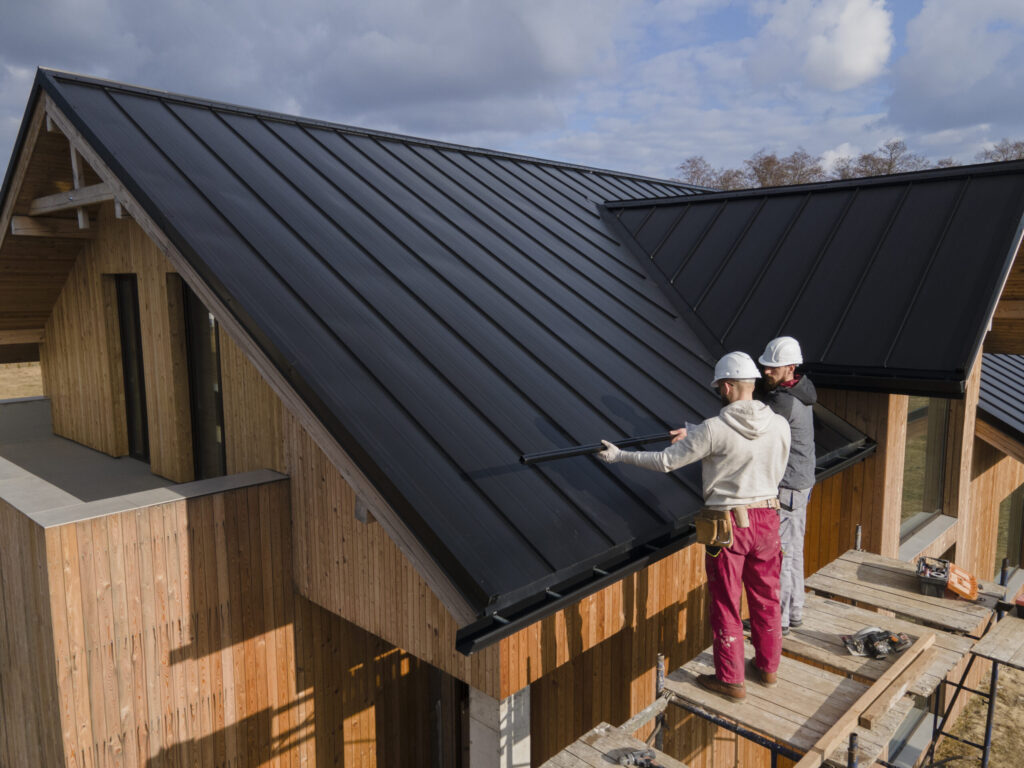
Emergency Roofing Columbus works Harris County roofs, and Cataula is one of the places where the difference between a 2006 house and a 1950s house decides the whole job. We look at the era, the decking and the flashing before we quote, so the price you are given reflects the roof that is actually there rather than the average of the road. Photographs go to you before the invoice, the scope you approve is the scope we build, and when the older house only needs its flashing rebuilt, we will tell you that instead of selling a field. That is the whole method: look first, then quote.
Why now is the right time for a Cataula roof
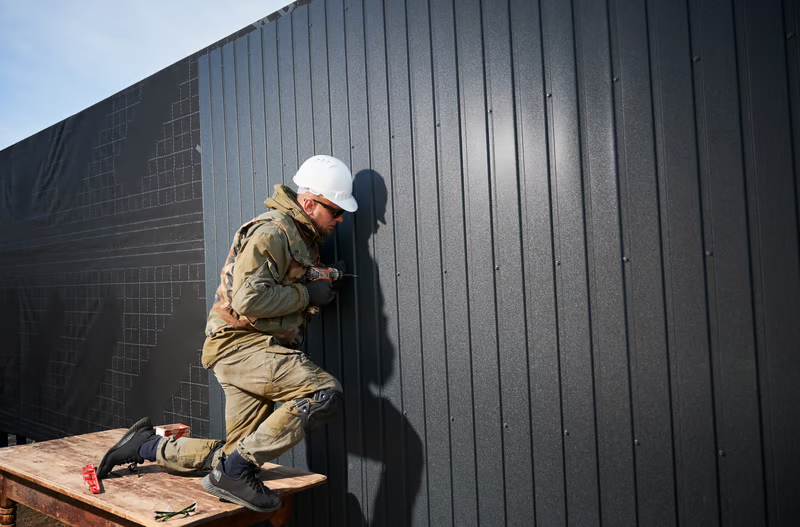
The 2000s cohort is the timing argument. Nearly half of Cataula’s housing was built in that decade, which means a large share of the community’s roofs are now seventeen to twenty-six years old and on their original shingle. That is the window where the field still looks sound and the details have already started to go: a boot that has cracked, a valley that has been caulked once, a step flashing that has lifted at a wall. Each of those is a small repair while the field is intact and a much larger one after a storm finds them.
The older houses carry a different clock. A 1950s roof with plank sheathing and original flashing does not fail on a shingle rating; it fails where water has been getting behind the flashing for years. Opening it in a dry stretch tells you whether the sheathing is sound while the choice is still yours, and whether the decking will need to be replaced when the shingle comes off.
And the storm record is the tiebreaker. Harris County has been inside federal declarations in 1995, 2004, 2011, 2016, 2017, 2024 and 2026. After each one, roofing work in the county compresses into a few months, materials get allocated, and the queue is longest for the houses that are already leaking. Inspecting in a quiet month is the cheaper half of that trade.
Cataula, GA and the roads we cover
Frequently asked questions
Is Cataula in Harris County?
Yes. Cataula is an unincorporated community and census-designated place in Harris County, Georgia, on US 27 about sixteen miles southwest of Columbus. Roofing permits for the community come from Harris County Community Development at 125 Barnes Mill Road in Hamilton.
How old are Cataula's roofs?
The 2024 American Community Survey figures for the Cataula CDP put the median year built at 2003, across 544 housing units. Of those, 248 — 45.6% — were built in the 2000s, and 175 units, 32.2%, predate 1980. That split is why two houses on the same road can need completely different work.
Why does the creek matter to a roof in Cataula?
Cataula is built along Cataula Creek, and creek corridors hold moisture longer than open ground. Shaded roof planes and north-facing valleys stay damp after rain, which produces the dark staining owners often read as shingle failure. The useful question is whether the shingle is stained or the decking behind it has gone soft, and that is an attic-and-roof question, not a visual one.
Should a 20-year-old roof be replaced?
Not by age alone. On a Cataula house the decision turns on whether the roof is single-layer, whether the decking is sound, and whether the boots and valleys have already been patched more than once. A 2000s roof with sound sheathing and intact flashing can be repaired; one with two covers and sealed valleys is a replacement.
What are five signs a Cataula roof needs attention?
Granules in the gutters, cracked sealant at the boots, a ceiling stain that returns after rain, lifted step flashing at a wall, and daylight visible from the attic along a rafter. On the older houses, add a sixth: a valley that has been caulked rather than rebuilt.
What happens on a roof inspection in Cataula?
We start in the attic and read the sheathing, then walk the roof and check boots, valleys and step flashing as separate items. On a pre-1980 house we also establish how many layers are present and whether the flashing has ever been rebuilt. You get a written scope before anything is scheduled.