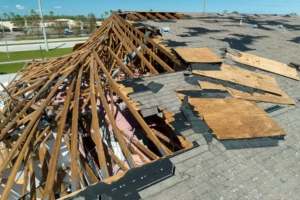
To file a hail damage roof insurance claim in Georgia, document the damage with dated photos, get an independent inspection from a licensed local roofer, then report the claim to your insurer promptly. When the adjuster inspects, have your roofer present, and know that a “wear and tear” denial can be disputed through your policy’s appraisal clause. Most Georgia policies give you a limited window to file, so act within days — not months. Emergency Roofing Columbus provides free documented hail inspections at (706) 418-8677.
The Hail Claim Process in Georgia, Step by Step
Hail is the trickiest storm claim to win, because the damage is easy to miss from the ground and easy for a carrier to dispute. Here’s the sequence that protects you:
Step 1 — Document before you touch anything. Dated photos of shingle bruising, dented gutters and downspouts, dinged AC fins and metal vents (hail marks on soft metal are strong corroborating evidence), and any granules washed into the gutters. Note the storm date. If the hail just hit, our guide to what to do in the first hour after storm damage walks through documentation safely.
Step 2 — Get an independent inspection first. A licensed local roofer inspects and tells you whether the damage is real, claim-worthy, and above your deductible — before you put a claim on your record. This is the single most valuable step, and it’s the one storm chasers skip because they want every roof to be a claim.
Step 3 — Report the claim promptly. Georgia policies commonly expect prompt notice (see our guide to how long you have to file a storm damage claim in Georgia). Give facts: the storm date, what you documented, what the inspection found.
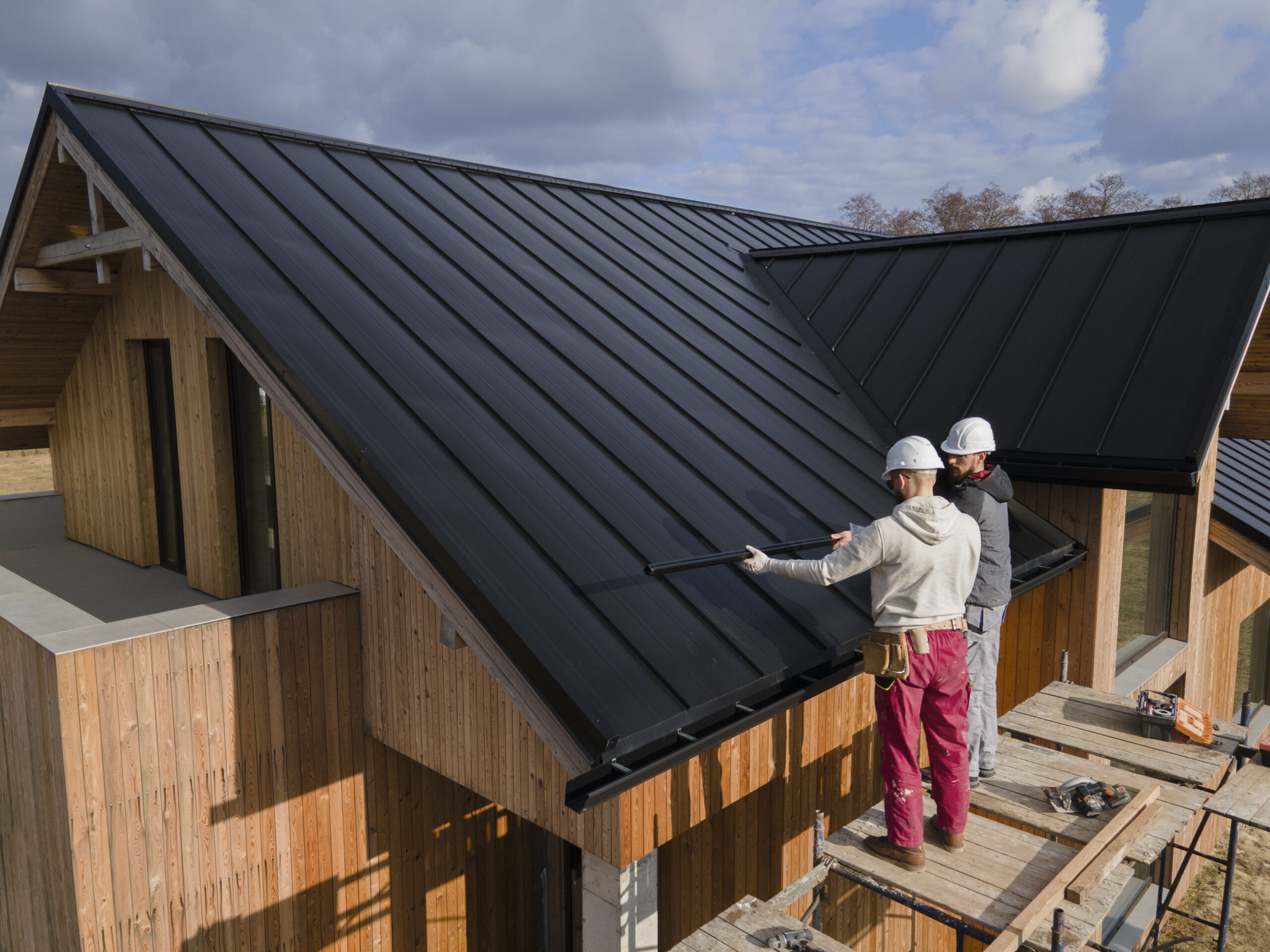
Step 4 — Be present for the adjuster — with your roofer. The adjuster works for the insurer. Having your own roofer on the roof at the same time means the damage gets pointed out and measured, not overlooked. Many Columbus homeowners who skip this step get a lowball scope.
Step 5 — Review the scope and settlement. Compare the adjuster’s line items to your roofer’s assessment. Missing slopes, omitted flashing, or a repair scope where a replacement is warranted are all disputable.
Step 6 — If it’s denied or underpaid, invoke your rights. This is where most homeowners give up — and where they shouldn’t. Keep reading.
“They Said My Hail Damage Is Just Wear and Tear — Can I Fight It?”
This is the single most common hail-claim complaint homeowners post online, and the answer is yes, you can fight it.
Here’s the key distinction adjusters blur: wear and tear is a condition, not a peril. Every roof has some wear. The question a claim turns on is whether hail caused new, sudden damage — not whether the roof also happens to be aging. A denial that waves at “wear and tear” without addressing the hail bruising is exactly the kind of denial that gets overturned.
Your tools, in order:
- Ask for the denial in writing, with the specific reason. Vague denials don’t survive scrutiny.
- Get your roofer’s documented rebuttal — photos of fresh hail bruising with a date-tied storm event.
- Invoke the appraisal clause. Almost every Georgia homeowner policy contains an “appraisal” provision: when you and the insurer disagree on the amount of a covered loss, each side hires an appraiser, and a neutral umpire settles the difference. It’s faster and cheaper than a lawsuit and it exists precisely for disputes like this.
- Escalate if there’s bad faith. If the carrier refuses to engage, Georgia law lets you file a written demand; a bad-faith refusal to pay a covered claim can expose the insurer to penalties plus attorney’s fees, and you can file a complaint with the Georgia Office of Insurance.
You don’t have to accept the first “no.” Most homeowners who push back with documentation get a second look.
What Adjusters Actually Look For on a Hail-Damaged Roof
Knowing what they check helps you make sure nothing gets missed:
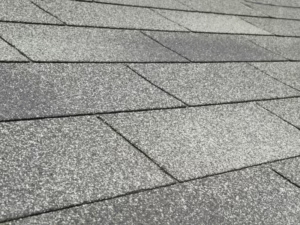
- Shingle bruising — soft spots where hail knocked granules loose and bruised the mat, exposing the asphalt. This is the core evidence.
- Granule loss in gutters — piles of shingle grit washed down after a storm.
- Random damage pattern — genuine hail damage is scattered and directional, not in neat lines (which suggests foot traffic or manufacturing defects).
- Collateral soft-metal damage — dents on gutters, downspouts, vents, flashing, and the AC unit’s fins. Adjusters trust these because they can’t be faked as easily as shingle marks.
- A test square — many adjusters chalk off a 10′ x 10′ area and count hail hits to decide repair vs. replacement.
“Will My Rates Go Up If I File?” and “Is It Even Worth It?”
Two fears that stop people from filing legitimate claims:
Will filing raise my premium? It can. A single weather-related claim usually affects rates less than an at-fault or repeated claim, but there’s no guarantee. This is exactly why Step 2 — an honest independent inspection — matters: you file when the damage clearly exceeds your deductible and skip it when it doesn’t.
How much does insurance pay for hail damage? If your roof is covered at replacement cost value (RCV), the insurer pays to replace the damaged roof, minus your deductible (often paid in two parts — an initial ACV check, then the depreciation released once work is complete). If your roof is on actual cash value (ACV) — common on older roofs — you get the depreciated value, which can be far less. Check your declarations page so you’re not surprised.
When is it not worth filing? When the repair is at or below your deductible. A handful of dinged shingles on a $2,500-deductible policy isn’t a claim — it’s a repair. An honest roofer will tell you that.
Hail in the Chattahoochee Valley
Columbus and the surrounding area — Phenix City, Midland, Fort Moore, Upatoi, Harris County — sit in a corridor that sees spring and early-summer hail regularly, often riding the same supercells that produce our wind and tornado warnings. Because our summers are hot and humid, hail-bruised shingles can deteriorate faster here: once granules are knocked off, Georgia sun cooks the exposed asphalt and accelerates failure. That’s part of why hail damage that “looks minor” is worth a professional look — the clock on a bruised shingle runs faster in this climate.
If you know a hail event crossed your neighborhood, don’t wait for a leak. By the time hail damage leaks, you’ve often lost months you could have claimed — and you may be near your policy’s notice deadline.
Getting Hail Damage Repaired the Right Way
Once your claim is approved, the repair matters as much as the paperwork. Hail-damaged asphalt shingle roofs need full-slope consistency — patching a few shingles across a hail-bruised slope leaves the rest to fail early. Insist on manufacturer-spec installation so your workmanship and material warranties stay valid, and get the scope in writing.
Frequently Asked Questions
Should I file a roof claim for hail damage?
File when an independent inspection confirms hail damage that clearly exceeds your deductible. If the damage is minor and the repair is near or below your deductible, filing may not be worth the potential rate impact. Get an honest inspection before deciding.
What not to say to a roof insurance adjuster?
Don’t guess at your roof’s age or condition or volunteer that it was ‘probably already worn.’ Stick to documented facts: the storm date, the hail damage found, and the collateral damage to metal surfaces.
How much does insurance pay for hail damage on a roof?
With replacement cost value coverage, the insurer pays to replace the damaged roof minus your deductible. With actual cash value coverage (common on older roofs), you receive the depreciated value. Check your policy’s declarations page for which applies.
Is it worth claiming hail damage on insurance?
Yes, when the damage is genuine and above your deductible — an unrepaired hail-bruised roof fails early, especially in Georgia’s heat. It’s not worth it for cosmetic or below-deductible damage.
Does insurance go up if I claim hail damage?
It can. Weather-related claims typically affect premiums less than at-fault claims, but increases vary by carrier. This is why filing only clearly claim-worthy damage matters.
What do insurance adjusters look for on roofs?
Shingle bruising and granule loss, a random (not linear) damage pattern, granules in gutters, and collateral dents on soft metal like gutters, vents, and AC fins. Many chalk a test square to count hail hits.
What scares insurance adjusters?
Thorough documentation and an independent licensed roofer present at the inspection. A homeowner with dated photos, a written damage assessment, and knowledge of the appraisal clause is far harder to underpay.
This article is general information about the Georgia hail claim process, not legal or insurance advice — policy terms vary, and you should verify your specific policy language with your carrier or a licensed professional.
Get Your Hail Damage Documented Before You File
The homeowners who win hail claims in Columbus are the ones who walk in with evidence. Emergency Roofing Columbus provides free, documented hail inspections — dated photo reports you can hand straight to your adjuster — and honest guidance on whether filing even makes sense for your roof. We work storm damage claims across Columbus, Phenix City, Midland, and Fort Moore.